What Is Data Lineage?
For those who work with data, understanding what data lineage is means being able to identify the starting point for building trust in information and turning it into a competitive advantage. Data lineage, in fact, represents the complete traceability of data throughout its entire lifecycle, from the moment it is generated until its final use.
This process makes it possible to accurately reconstruct the entire path that data takes within an IT ecosystem, highlighting every transformation, movement, and dependency among systems, databases, and applications.
In the context of systems integration and artificial intelligence, data lineage therefore plays a strategic role in ensuring data transparency, reliability, and governance. It allows organizations to verify the origin of every piece of information, understand how it has been processed and used, and thus ensure that analytical processes and business decisions are based on accurate, consistent data that complies with increasingly stringent quality and compliance standards.
Data Lineage in IT: What Is It For?
Any information that passes through a system leaves a trace. In computer science, data lineage is what allows us to track that information, revealing connections, transformations, and dependencies that would otherwise remain hidden.
In modern IT architectures, which are often distributed across multiple sources—such as hybrid cloud environments and legacy systems—the ability to map the data lifecycle becomes a key factor in ensuring governance, security, and the reliability of information. Accurately tracking every step, therefore, allows us to understand not only where data resides, but also how it is transformed, used, and shared within the organization.
With proper data lineage management, companies can quickly identify errors, anomalies, and redundancies, improving the overall quality of information and optimizing the entire information ecosystem. Furthermore, data lineage in IT serves as a cornerstone for regulatory compliance (e.g., GDPR, ISO 27001, internal audits) and for collaboration between IT and business departments, making data management processes more seamless, traceable, and secure at every stage of the operational cycle.
How Data Lineage Works: Traceability and Transparency
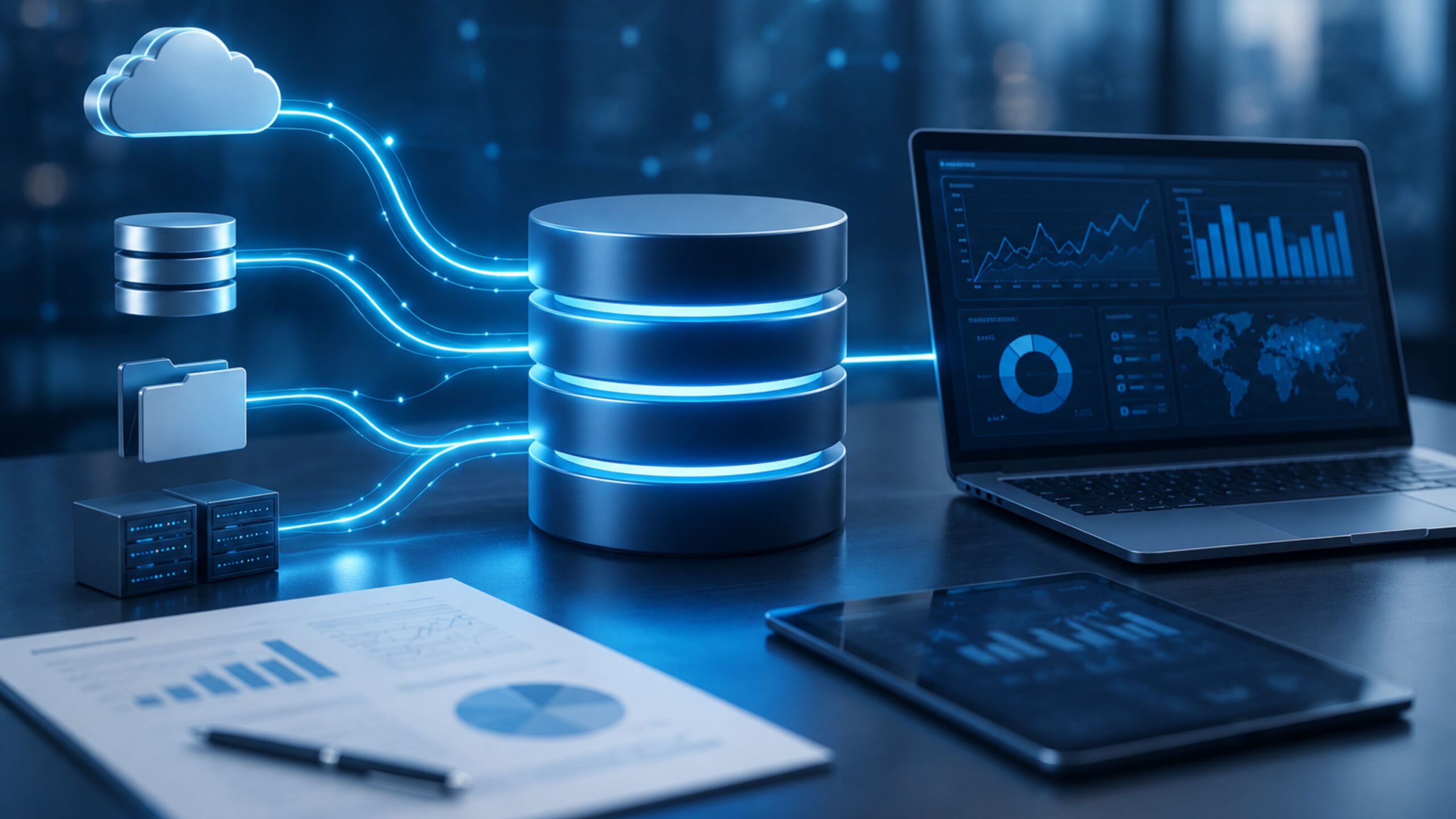
Understanding what data lineage is also means understanding how this tool translates into operational value for the business. After defining its strategic role, it’s important to examine how it works in practice: a data lineage system captures and visualizes every step of data as it moves through pipelines—across databases, APIs, and applications—offering a comprehensive and dynamic view of information flows.
This dynamic map allows you to:
- quickly identify the sourceof an anomaly or error in the data;
- verify consistency among the various systems;
- make machine learning processes more efficient by providing verifiable and accurate input.
The Benefits of Data Lineage for Businesses
Now that we know what data lineage is and how it works, let’s delve into another key aspect: what is its concrete value for the company? Implementing a data lineage system offers numerous benefits, both operational and strategic, as it improves the quality, security, and usability of data within the organization. A structured approach to data traceability transforms business information into a true competitive asset, capable of generating measurable value and supporting more informed and timely decision-making.
Some of the main benefits of data lineage include:
- Better data quality, thanks to the ability to accurately verify the origin, transformations, and dependencies between systems.
- Greater compliance with regulations regarding privacy, security, and data governance.
- Operational efficiency, thanks to the reduction in the time required to identify, diagnose, and correct errors.
- More robust decision-making, based on traceable, consistent, and always up-to-date information.
- Collaboration between IT and business teams, who can share an integrated and transparent view of information flows.
Vertical and Horizontal Data Lineage: What Are the Differences?
In the context we have discussed so far, we should take a closer look at the two main types of data lineage we may encounter: vertical and horizontal data lineage.
The first concerns the traceability of data across different levels of abstraction (from raw data to transformed and analyzed data), while the second describes the flow of data between different systems or applications.
Integrating both perspectives enables companies to gain a comprehensive, multi-level view of their information infrastructure, reducing the risk of inconsistencies and improving interoperability between platforms. In an approach based on AI and systems integration—such as the one we offer at artea.com—the combination of vertical and horizontal lineage enables total control over the data lifecycle and maximizes the strategic value of business information.
In this context, our expertise in Big Data Engineering enables us to design scalable architectures and intelligent data lineage solutions capable of integrating data from diverse sources and making it traceable, governable, and ready to power AI models. Through an approach based on machine learning, data integration, and systems engineering, we help organizations map, understand, and leverage their data assets in an automated and secure manner.
From defining a governance strategy to creating transparent data pipelines, our goal is to make decision-making processes more reliable and accelerate continuous innovation.
You, too, can leverage data lineage as a driver of efficiency and insight to gain a competitive edge in increasingly complex digital ecosystems. Contact us today!