Have you ever wondered how your voice assistant understands your requests, or how chatbots are able to respond so naturally? Behind these tools lies a technology called Natural Language Processing (NLP).
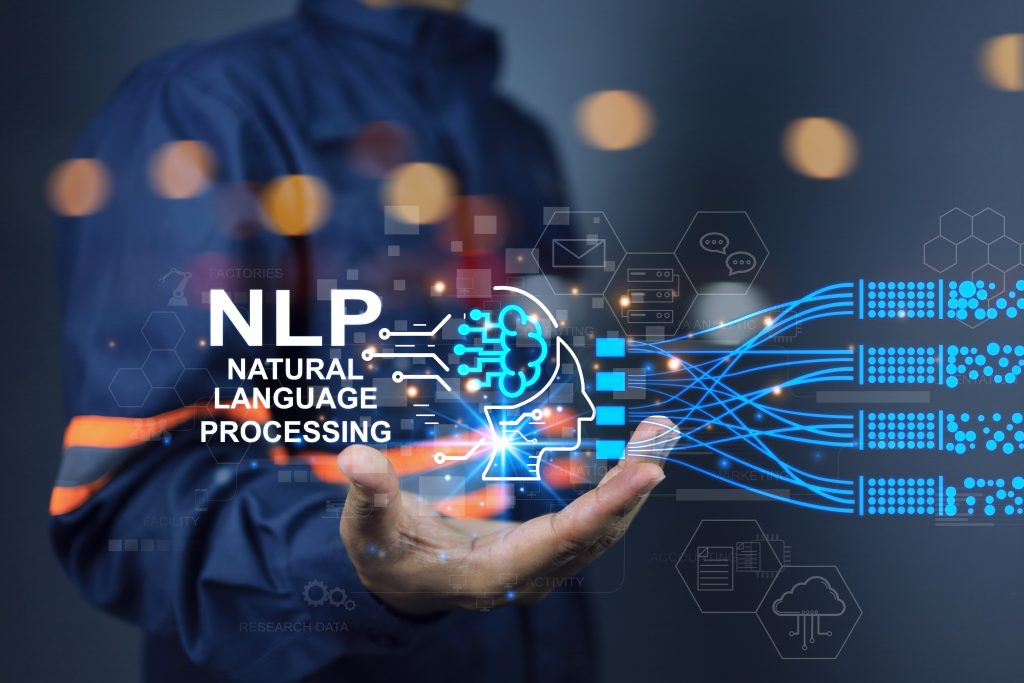
NLP is a field of artificial intelligence (AI) that enables computers to understand, interpret, and generate human language. This technology is now a part of many of the applications we use every day, from machine translation systems to virtual assistant services. In this article, we’ll explore what NLP is, the technologies that support it, and its most recent applications.
Table of contents
- When and Where Did Natural Language Processing Begin?
- What Is Natural Language Processing (NLP) Today?
- The Key Technologies Behind Modern NLP
- NLP and Generative AI: The Evolution of Digital Assistants
- Current Applications of NLP
- Natural Language Processing: Recent Applications and Case Studies
- Emerging Challenges in NLP
- The Future of NLP: Toward an Increasingly Natural Interaction
- Discover artea.com's NLP offerings
When and Where Did Natural Language Processing Begin?
NLP has its roots in the last century, with the first attempts to make computers “understand” human language. One of the defining moments in its history came in 1950, when British mathematician Alan Turing introduced the concept of the “intelligent machine” through the well-known Turing Test, which aimed to determine whether a machine could exhibit behavior indistinguishable from that of a human during a written conversation.
The first machine translation project was launched in the United States at Georgetown University in 1954, and it demonstrated the theoretical potential of NLP by automatically translating sixty simplified sentences from Russian into English. However, the most significant developments began in the 1980s, with the introduction of statistical techniques and the growing use of machine learning models. Since then, NLP has continued to evolve, leading to the advanced technologies that are now part of our daily lives.
What Is Natural Language Processing (NLP) Today?
Natural Language Processing enables machines to communicate with us using natural language. The main goal is to break down the communication barrier between humans and machines, making this interaction more intuitive. Until now, interactions with computers have been mediated by devices such as keyboards, mice, and touchscreens.
Thanks to the introduction of NLP, we can finally speak to or write to our devices, just as we do with voice assistants such as Amazon’s Alexa or Apple’s Siri, which understand voice commands and respond naturally. Advanced NLP models, such as OpenAI’s ChatGPT or Google’s Gemini, are already capable of handling complex interactions and providing accurate responses, simulating a genuine human conversation.
The Key Technologies Behind Modern NLP
Advances in NLP are driven by technologies such as Transformers and advanced neural network models , including GPT (Generative Pretrained Transformer) and BERT (Bidirectional Encoder Representations from Transformers). Unlike earlier systems, which relied primarily on the statistical frequency of words, these models are capable of understanding the context of sentences by converting text into a numerical space of meanings.
GPT and BERT use “transformer”-based architectures that enable them to understand the context of a word by analyzing all the other words in the sentence, both preceding and following it. Both models learn from enormous amounts of textual data, thereby learning to capture complex linguistic relationships: their ability lies in predicting the next word in a given context, generating responses or texts that are grammatically correct and consistent with that context.
NLP and Generative AI: The Evolution of Digital Assistants
The evolution of NLP has given rise to generative models—such as those underlying ChatGPT—which represent a significant leap forward in human-machine interaction. Today, these tools are no longer limited to responding to direct commands; they can act proactively, offering suggestions and personalized support. For example, modern voice assistants and chatbots no longer follow predefined paths; instead, they can understand the context of questions and draw on extensive knowledge bases to provide accurate answers.
Another area where NLP has revolutionized human-computer interaction is in search engines, which are becoming increasingly “semantic.” Today, these tools no longer simply find the keywords a user searches for, but use advanced linguistic models to understand the overall meaning of sentences. Thanks to techniques such as semantic analysis and language representation models, a search engine is able to return results based on context and user intent, finding content that is more relevant than a simple match of terms.
Current Applications of NLP
The applications of NLP continue to grow and transform various industries, from customer service to machine translation to content creation. For example:
- Custom Chatbots: Companies are adopting increasingly sophisticated chatbots that can answer questions from customers or employees in real time, improving the user experience and reducing wait times.
- Machine translation: Translation systems have already improved significantly, not only in terms of grammar but also in their understanding of certain lexical and cultural nuances.
- Sentiment Analysis: Used to monitor public opinion on social media in real time, this technology is essential for companies that want to understand what their customers or employees are thinking.
- Content Automation: Automated summarization tools and AI-assisted copywriting are revolutionizing the way editorial and marketing content is generated, enabling the rapid creation of large volumes of text.
Natural Language Processing: Recent Applications and Case Studies
Several industries are already successfully tapping into the potential of NLP. Here are some applications of Natural Language Processing:
- In the retail sector, chatbots help customers find products, resolve issues, or complete online orders quickly and efficiently.
- In the healthcare sector, NLP is used to analyze large amounts of clinical data, such as electronic health records, thereby improving patient care and diagnosis.
- In the financial sector, NLP is used to extract information from complex documents such as legal contracts, speeding up processes that would otherwise require many hours of human labor.
- Another particularly interesting application is the use of chatbots integrated with semantic search systems, which enable faster and more accurate access to documents and corporate information.
Emerging Challenges in NLP
Despite its great progress, like any technology, NLP is not without its challenges. One of the most significant issues concerns the biases present in language models. Because these models learn from large amounts of documents and information that reflect culture and history, they can unknowingly reproduce prejudices. A practical example is a chatbot that, if trained on unbalanced data, might respond with stereotypes based on gender, ethnicity, or religion.
Furthermore, privacy management is a sensitive issue: as the use of personal data in NLP applications increases, it is essential to ensure that this information is handled securely and transparently. Finally, current models struggle to understand context, sarcasm, or local idiomatic expressions, often responding literally or out of context.
The Future of NLP: Toward an Increasingly Natural Interaction
Looking ahead, NLP will continue to evolve with the development of more advanced language models and integration with multimodal technologies that combine language, images, and video (as in the “4o” version of ChatGPT). More recently, OpenAI’s “o1” model seeks to simulate forms of logical reasoning, improving its ability to handle complex questions through a “chain of thought.” This opens up new possibilities in sectors such as healthcare and education, where human-machine interaction can offer innovative and personalized solutions.
Discover artea.com's NLP offerings
If you want your company to remain competitive in the digital age, artea.com offers cutting-edge solutions based on the latest natural language processing technologies.
Thanks to our ongoing research and collaboration with leading industrial and academic partners, we can develop custom chatbots, sentiment analysis systems, and semantic search engines tailored to your needs. Contact us today for a consultation and find out how we can help take your company to the next level of digital transformation.