Computer vision represents one of the most fascinating and advanced frontiers of technology. This interdisciplinary field focuses on the ability of machines to “see” and interpret the external environment, in a way that mimics the human capacity to perceive through our eyes and understand the world around us.
If the idea of machines that “see” and “understand” sounds like science fiction to you, join us on this journey into the world of computer vision, where science meets imagination and where the possibilities seem endless. Together, we’ll explore the theoretical foundations and practical capabilities of computer vision, thanks to advances in artificial intelligence and machine learning.
Table of contents
- Computer Vision: The Hidden Meaning in Pixels
- The Theoretical Foundations of Computer Vision: Agents and Sensors
- The Practical Applications of Computer Vision: From Theory to Neural Networks
- The New Frontiers of AI: Seeing, Understanding, and Acting
- Applications of Computer Vision
- Vulnerabilities in Computer Vision Systems: “Adversarial Examples”
- artea.com's Contribution: Our Use Cases for Manufacturing and Healthcare
- Automation in the Manufacturing Industry
- Analysis of Diagnostic Images in Medicine
- Join us in embracing the future of computer vision
Computer Vision: The Hidden Meaning in Pixels
Let’s imagine a machine that, when looking at a photograph, can discern not only colors and shapes, but also emotions, intentions, and context: Computer Vision aims to make all of this possible. But the path to achieving this goal is neither simple nor short.
At the heart of computer vision lies image processing: a complex set of algorithms and techniques that transform pixels into information. Here’s where it gets tricky: while recognizing a familiar face is almost instinctive for a human, for a computer it requires an incredible amount of processing—from identifying the contours of the face to recognizing its distinctive features.
Today, we are only at the beginning of this extraordinary journey. But why is it so important to us? In addition to its obvious applications in fields such as security and surveillance, computer vision has the potential to revolutionize sectors such as medicine, industrial automation, and even art. Computer vision will enable doctors to identify diseases in diagnostic images with unprecedented accuracy, or allow a robot to navigate complex environments completely autonomously.
The Theoretical Foundations of Computer Vision: Agents and Sensors
At the heart of computer vision lies the concept of systems based on so-called “agents.” An agent-based system is an autonomous entity capable of observing its environment, making decisions based on its observations, and taking actions to achieve specific goals.
In this area of research, we would like to cite the work of Prof. Marco Somalvico. Human beings, understood as agents in their own right, perceive the world primarily through a sensor of fundamental importance: the eye. From this perspective, images from the environment pose one of the greatest challenges on the path toward building AI that is more human-like.
In the context of the interaction between machines and the real world, as explored by Somalvico, computer vision serves as a bridge, enabling machines to perceive phenomena in the real world, interpret them, and react accordingly. The complexity of reality—with its variety of colors, shapes, and movements—requires highly sophisticated algorithms and models to decode it in useful ways.
The Practical Applications of Computer Vision: From Theory to Neural Networks
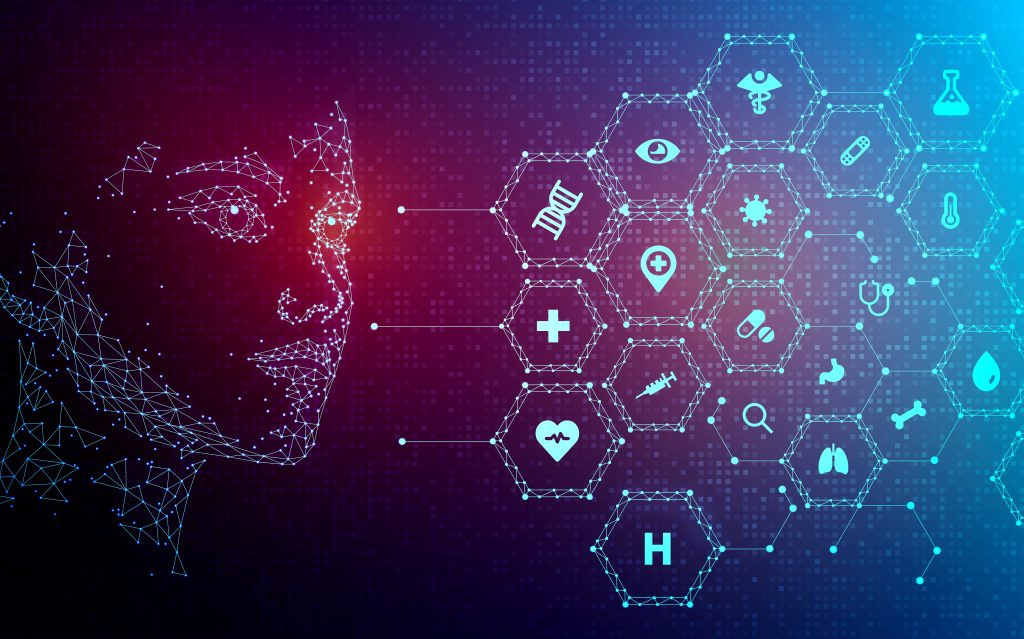
The field of image analysis and the study of visual perception has evolved significantly, thanks in particular to the application of artificial neural networks, including convolutional neural networks (CNNs) and recurrent neural networks (RNNs). Let’s take a brief look at what these are.
- CNNs (Convolutional Neural Networks), inspired by the structure of the biological neural networks in the human visual system, enable machines to recognize patterns such as lines, shapes, and contours. These networks are widely used in applications such as facial recognition or object classification in photos, enabling machines to “see” and identify different entities in an image.
- RNNs (Recurrent Neural Networks), on the other hand, enable machines to understand the context and the sequence in which information appears. They are often used in applications such as machine translation or speech recognition. But in the case of video analysis, for example, they are useful for identifying objects and areas based on their relative position, as measured by depth of field.
The New Frontiers of AI: Seeing, Understanding, and Acting
Neural networks have made great strides thanks to advances in machine learning technologies. However, one aspect to consider is that such training remains largely limited and specialized, as in the case of face or vehicle recognition—that is, objects belonging to a single category.
The future goal, however, is focused on General-Purpose Artificial Intelligence (AGI) that can utilize computer vision in a broader and more versatile way. One step in this direction is, for example, the introduction of image recognition in version 4.0 of ChatGPT.
Applications of Computer Vision
While it is true that, at present, there is still no artificial intelligence capable of “seeing,” “understanding,” and “acting” in a general way—in the full sense envisioned by AGI—vertical applications across various sectors are now multiplying:
- Industrial Automation: for quality control and visual inspection of products on production lines.
- Advanced Surveillance: for facial recognition, detection of suspicious objects, and monitoring of sensitive areas.
- Medicine: in diagnostics, through the analysis of radiographic and tomographic images.
- Autonomous Driving: for interpreting the road environment, including traffic signs, vehicles, and pedestrians.
- AR (Augmented Reality): to overlay virtual elements onto the real world, as in video games or on-the-job training.
- OCR (Optical Character Recognition): for the automatic reading and interpretation of text in documents and images.
- Aerospace industry: for autonomous navigation and object recognition in space.
- Retail: for analyzing customer behavior and managing inventory.
- Transportation and Logistics: For Automated Goods Handling and Road Safety.
Vulnerabilities in Computer Vision Systems: “Adversarial Examples”
Finally, it is important to note that there are situations in which computer vision can be ineffective. For example, if images are introduced that interfere with the machine’s vision, the system may stop functioning properly. Anti-surveillance clothing is already on the market—that is, garments made with fabrics, materials, or designs that hinder or confuse cameras’ ability to recognize and identify people.
In these cases , we refer to “adversarial examples”— that is, data or images designed specifically to deceive a machine learning model, causing it to make errors. This concept has obvious implications for the security and reliability of artificial intelligence models, particularly deep neural networks.
artea.com's Contribution: Our Use Cases for Manufacturing and Healthcare
In a rapidly evolving technological landscape, artea.com boasts success stories involving the application of computer vision in various sectors, such as manufacturing and healthcare.
Automation in the Manufacturing Industry
In the manufacturing sector, by using artificial intelligence algorithms, we are able to streamline the inspection and evaluation of defects in AOI (Automated Optical Inspection)-based production processes, such as integrated circuits and PCBs (printed circuit boards).
The implementation of our computer vision systems automates tool positioning, eliminating the need to manually adjust guides for each part, thereby reducing the complexity of automation and increasing precision.
Analysis of Diagnostic Images in Medicine
In the medical field, we use machine learning to analyze the progression of surgical procedures, such as lip sutures. The storage and processing of 2D and 3D images enable comparative evaluation over time, facilitating the refinement of surgical and diagnostic techniques.
In addition, the use of neural networks to analyze prenatal ultrasound images helps detect morphological abnormalities early on, improving the effectiveness of treatments and ensuring a good quality of life for patients with cleft lip and palate.
Join us in embracing the future of computer vision
The era of computer vision is here, and the technological challenges it presents must be tackled with passion and a spirit of innovation. Find out what artea.com does: If you’re also interested in exploring how technology can transform your business or industry, we invite you to contact us.
We are ready to share our expertise and tailor advanced solutions to your specific needs. Computer vision represents an exciting frontier in AI: together, we can take full advantage of it to achieve extraordinary results.